How Uniswap Swaps Work — A Practical, Security-first Guide for US Traders

Imagine you’re a US-based trader who needs to move from ETH to a stablecoin quickly before an earnings report drops. You open Uniswap, enter an amount, set slippage, and hit swap. The trade goes through, but what actually happened under the hood? Which choices you made mattered for price, fees, and — crucially — security? This article pulls open the mechanism and corrects common myths so you can trade with clearer expectations and better risk controls.

We’ll use a concrete scenario — a $5,000 ETH-to-USDC swap on Uniswap — to anchor the discussion. That trade size is large enough to expose price impact, router-path choices, and MEV risk, but small enough for an active retail trader to execute from a self-custodial wallet. The goal: give you mental models you can reuse, highlight where Uniswap’s design reduces attack surface, and lay out operational steps and limits you need to respect.

Uniswap logo; useful to signal the protocol and its AMM-based liquidity pools that determine prices via token reserve ratios.

What actually happens during a swap (mechanism-first)

Uniswap uses an Automated Market Maker (AMM). Instead of matching buy and sell orders, a liquidity pool holds reserves of two tokens (for example ETH and USDC). Prices follow the constant product rule: x * y = k. When you swap ETH for USDC you add ETH to the pool and remove USDC; the reserves shift and the price moves automatically according to the math. This is why large trades generate price impact: changing the ratio of x and y changes the marginal price you receive.

Uniswap’s Smart Order Router (SOR) runs before the transaction to find the most efficient path across pools, versions, and chains. For many pairs the SOR will split a single order across multiple pools or route via an intermediate token (often a widely used pair like WETH) to reduce overall slippage. The router output becomes the on-chain transaction you sign. If the execution would exceed your pre-set slippage tolerance the transaction reverts.

On top of that, Uniswap V4 introduced hooks and dynamic-fee primitives that allow pool logic to be customized and for fees to adjust to market conditions. Hooks can be used to implement things like conditional fee tiers or specialized pool behavior; these reduce the need for forks or external contracts but also mean a trader should be aware which pool implementation they are interacting with.

Security architecture and what it implies for traders

Important: the core Uniswap contracts are immutable. This is a deliberate security trade-off — immutability reduces the protocol’s attack surface by preventing future upgrades that could introduce backdoors. The countervailing cost is reduced flexibility: if a critical bug is discovered in core contracts, the protocol cannot patch them in-place. Instead, mitigation must occur through off-chain coordination, new contract deployments, or governance-driven migrations. For traders, immutability means that the basic AMM math and routing behavior is predictable and auditable, but you must still verify which pool version, hooks, or wrappers you interact with.

Uniswap’s wallet and default routing include MEV protections: front-running and sandwich attacks are mitigated by routing swaps through private transaction pools and by wallet-level protections. This lowers the probability that your order will be exploited by searchers, but it does not eliminate MEV entirely — particularly for trades executed through third-party interfaces or custom contract calls. Flash swaps are another tool in the protocol: they permit trustless token borrowing inside a single transaction. That facility is powerful for arbitrage and complex strategies, but it also creates the conditions under which a skilled adversary could attempt atomic manipulations — so traders should avoid signing unfamiliar contract calls.

Common misconceptions — and the corrected view

Misconception 1: “If the smart contract is immutable it’s automatically safe.” Correction: immutability prevents alterations to core code, which is good for preventing malicious upgrades. However, immutability does not prevent logic errors that existed at deployment or unsafe peripheral contracts (custom pools, wrappers, or UI integrations). Always check the exact pool implementation (V2, V3, V4 with hooks) before depositing funds or approving tokens.

Misconception 2: “MEV protection makes me invulnerable.” Correction: default MEV protection reduces visible-execution front-running for standard swaps on Uniswap’s interface and wallet, but trades routed via external aggregators, manual contract calls, or permissioned liquidity sources may still be exposed. MEV risk scales with trade visibility and predictable routing.

Misconception 3: “Impermanent loss only matters for volatile tokens.” Correction: impermanent loss is a function of relative price divergence between pooled assets. For pairs involving a stablecoin and a volatile token, IL can be significant if the volatile asset moves sharply. Concentrated liquidity (Uniswap V3) changes the calculus: it increases fee earnings per capital deployed when the price remains inside the chosen range, but it also concentrates exposure and therefore can increase potential IL if price leaves that range.

Decision-useful rules and heuristics for US traders

1) Set slippage conservatively for large orders. If your $5,000 ETH-to-USDC order would move price more than your tolerance, split it or use time-weighted execution. Slippage controls exist exactly to prevent accidental execution at much worse prices.

2) Prefer the official Uniswap interface or the Uniswap Wallet for MEV-protected routing when possible. If you use an aggregator, compare estimated execution paths and be wary of approvals that grant excessive token permissions.

3) When providing liquidity, quantify impermanent loss relative to expected fee income. Use concentrated liquidity only if you can monitor ranges or hedge exposure; passive, wide-range LPing reduces IL risk but lowers fee capture efficiency.

4) Check pool implementation: V2, V3, or V4 with hooks. V4 may offer lower gas and dynamic fees, but hooks can change pool semantics. If a pool has a custom hook, verify its code or stick to canonical pool implementations.

5) Keep approvals minimal and use hardware wallets for larger trades. The wallet is the frontline defence: a self-custodial setup with hardware signing reduces phishing and front-end risk.

Where Uniswap typically breaks or becomes risky

Low-liquidity pools are the obvious hazard: price impact is high, slippage is large, and sandwich attacks are more profitable for adversaries. Even with MEV protections, low-liquidity trades remain risky. Another failure mode is social engineering around token approvals—malicious dApps trick users into approving tokens or transferring assets. Technically sophisticated attacks also exploit mismatches between on-chain assumptions (for example, oracle-feeds assumed off-chain) and real-time conditions; in short, do not sign arbitrary contract calls without code review or reputable interface backing.

Finally, cross-chain and multi-chain support introduces operational considerations. Uniswap runs on many networks (Ethereum, Arbitrum, Base, etc.). Moving assets between chains requires bridges or swap paths that have their own security models. A safe trade on Ethereum mainnet is not automatically safe when replicated on a less-secure or nascent chain.

Short checklist before you hit confirm

– Confirm network and token contract address (avoid look-alike tokens).
– Verify pool version and whether hooks or custom logic are present.
– Set slippage to a level that matches your risk tolerance and trade urgency.
– Review the router’s suggested path and gas estimate; for large orders consider splitting execution.
– Use wallet MEV protections and hardware signing when possible.

For step-by-step guidance on performing swaps and linking wallets, Uniswap provides onboarding and trade guides that can help you avoid common UX traps: https://sites.google.com/uniswap-dex.app/uniswap-trade-crypto/

What to watch next (signals, not forecasts)

Monitor three trends that will materially affect trading and liquidity decisions: 1) Adoption of Uniswap V4 hooks — they can improve fee efficiency but also raise the need to inspect pool code; 2) Layer-2 flows to Unichain and other rollups — lower gas costs change the threshold where small trades become economical; 3) MEV research and competition from private transaction relays — improvements here reduce extractable value for searchers but may shift where liquidity concentrates. These are directional signals: none guarantee outcomes, but they change the trade-offs between cost, speed, and risk.

FAQ

Q: How do I know which Uniswap pool version I’m interacting with?

A: The interface normally labels pool versions; if uncertain, check the pool’s contract address in a block explorer and verify its factory or implementation identifiers. V3 pools will show concentrated liquidity parameters (tick ranges); V4 pools may reference hooks. When in doubt, use canonical pools on mainnet or a reputable UI.

Q: Can I avoid impermanent loss entirely?

A: Not if you provide two-sided liquidity in an AMM. Impermanent loss results from relative price movement between the two assets. You can mitigate it by choosing stable-stable pairs, using single-sided exposure strategies off-chain, or limiting range and duration of concentrated liquidity, but the risk cannot be eliminated for two-token volatile pairs.

Q: Is Uniswap safe for large trades?

A: “Safe” is conditional. On mainnet with deep pools, large trades are executable with predictable price impact and reduced MEV exposure if routed through protected channels. The operational risks are approvals, private-key security, and choosing low-liquidity pools. For very large orders, institutional traders use OTC desks or tactical order-splitting to control market impact.

Q: What should US users be especially mindful of?

A: US traders should pay attention to tax reporting and regulatory exposure, maintain strict custody discipline, and prefer contract-audited pools on mainnet. The technical security posture (immutability, MEV protection, hooks) reduces some attack vectors but does not remove compliance and operational risks.

Trading on Uniswap blends algorithmic certainty (the AMM math) with operational judgment (which pool, how much slippage, which interface). Once you treat swaps as short, auditable programs rather than opaque clicks, you’ll make safer choices: limit approvals, verify pool code and version, use MEV-protected paths, and quantify impermanent loss before committing liquidity. Those practices turn a single swap from a gamble into an informed financial action.

Do WalletConnect and “security features” actually keep your DeFi funds safe?

Which part of a DeFi wallet really stops an attacker: the hardware device, the browser UI, a transaction simulator, or the connector you use to sign? That question matters because experienced DeFi users tend to stack defenses without always understanding how those layers interact or where they fail. This article unpacks the mechanics of wallet security features most relevant to active DeFi traders—transaction simulation, approval management, hardware wallet integration, local key storage, and WalletConnect-style connectors—so you can select and configure tools with clearer trade-offs instead of relying on marketing shorthand.

Start with a simple proposition: security in a non-custodial wallet is not a single feature. It’s a small network of properties and assumptions—what stores your keys, where decisions are displayed, which network is active, and how dApp requests are filtered. Each link in that network reduces a specific class of risk but leaves others exposed. I’ll use Rabby Wallet’s feature set as a concrete example throughout because it exposes many of these design choices: local encrypted key storage, transaction simulation, approval revokes, hardware wallet support, risk scanning, multi-chain automation, and WalletConnect-like interoperability.

Rabby Wallet logo; useful as a visual anchor for the wallet features and security mechanisms discussed

How the pieces work together: a mechanism-level view

Think of a DeFi transaction as three phases: intent creation (you choose action and parameters), signing (your private key produces a signature authorizing network execution), and execution (the network runs the smart contract). Security features map to these phases.

– Local key storage and hardware wallet support change the signing phase. When keys are stored encrypted on-device or inside a hardware wallet, signing requires either the local OS passphrase or a physical confirmation on the hardware device—this reduces remote key-exfiltration and malware-on-other-machines attacks. Rabby stores keys locally and integrates with many hardware wallets, so you can choose cold-signing for high-value operations.

– Transaction simulation and risk scanning operate before signing: they reconstruct a likely post-execution state and flag suspicious payloads. Simulation tells you estimated token balance changes and slippage; a risk scanner surfaces known-bad contracts or phishing indicators. These are powerful because they convert opaque bytecode into human-readable signals before you sign, but they’re not foolproof—the scanner’s coverage depends on threat intelligence and heuristics, and simulators can be blind to on-chain oracle manipulations or time-dependent logic.

– Approval management affects post-execution risk. Unlimited token approvals let a contract move funds at will; revoking reduces the attack surface. A wallet that exposes current approvals and makes revocation easy converts a long-standing security hygiene problem into an actionable control. Rabby’s revoke feature directly addresses this vector.

Myth-busting: common misconceptions and the reality

Myth 1: “If a wallet supports hardware devices, my assets are safe.” Reality: Hardware wallets mitigate private-key theft but depend on correct host integration. A compromised host that crafts malicious transactions can still get you to confirm a dangerous signature if the hardware UX doesn’t clearly show the true recipient, amount, or call data. So hardware is necessary but not sufficient; pair it with transaction simulation and readable metadata.

Myth 2: “Transaction simulators catch every scam.” Reality: Simulators reconstruct what a contract call would do given current chain state. They struggle with manipulative oracles, off-chain approvals, and front-running or MEV-redirected flows. Simulation warns you about many common mistakes (token swaps, unexpected token transfers) but it is not an oracle against novel exploit logic.

Myth 3: “WalletConnect-style connectors are inherently risky.” Reality: Connectors provide remote dApp-to-wallet communication, often via QR codes and session keys; the risk vector is session management and the underlying transport security. Properly implemented, connectors avoid exposing private keys. The practical danger is lax session hygiene—persistent sessions on a mobile wallet or approving unknown requests from a re-used connection. Good clients support session listing and revocation; use them.

Trade-offs and practical heuristics for experienced users

Trade-off 1 — Convenience vs. confirmation friction. Features like “Flip to MetaMask” or auto network switching reduce friction but increase the chance of accidental approvals on the wrong chain or protocol. Heuristic: reserve automated conveniences for low-value activity and use stricter settings (manual network select, hardware signing) for large transactions.

Trade-off 2 — Local keys vs. custodial convenience. Local encrypted keys with no back-end dependency (as Rabby implements) reduce systemic custodial risk but mean you must manage backups yourself. Heuristic: keep an offline, tested seed backup and consider a hardware wallet for funds you intend to hold long-term.

Trade-off 3 — Aggregators vs. transparency. Built-in swap and bridge aggregators find efficient routes, but complex multi-hop transactions increase surface for slippage or unexpected approvals. Heuristic: inspect the simulator output closely when using aggregators and prefer single-hop routes for high-value transfers.

Where these systems break — and what to watch for

1) Phishing and UI spoofing: Even audited, open-source wallets can be targeted by malicious browser extensions or spoofed websites. Always check domain and extension provenance, and prefer hardware confirmations that display essential transaction data. 2) Oracle manipulation and flash-loan attacks: Transaction simulators assume current on-chain state; sudden oracle price changes between simulation and inclusion can produce different outcomes. 3) Social engineering: Attackers attempt to trick users into approving high allowances or signing malicious payloads claiming to “claim airdrops.” The defense is process: never sign unexpected requests; use revoke features frequently.

Rabby’s combination—local key storage, transaction simulation, an integrated risk scanner, approval revocation, and hardware wallet compatibility—addresses many of these failure modes simultaneously. But remember: tools reduce probability; they do not create absolute safety.

Decision-useful framework: picking and configuring a secure DeFi wallet

Use three cells: Asset Type, Interaction Mode, Defensive Controls.

– Asset Type: small daily trading balance vs. long-term holdings. Keep hot funds limited; store larger positions in hardware wallets. Rabby supports both via hardware integrations and local keys.

– Interaction Mode: active trading with aggregators and bridges vs. passive staking. Active modes need transaction simulation and careful approval management; passive modes benefit most from cold storage.

– Defensive Controls: always enable transaction simulation and risk scanning, use the revoke feature monthly, and prefer hardware confirmation for high-value approvals. Top up gas flexibly (Rabby allows stablecoin gas account top-ups) but understand this changes where funds are held for gas payments.

For a practical next step, audit your current wallet session list, revoke any unused approvals, and practice signing a harmless simulated transaction with your hardware device to become comfortable reading its UX. If you want to compare a wallet with the feature set described here, see the rabby wallet official site for documentation and downloads.

What to watch next — conditional scenarios

Signal 1: better wallet UX for hardware confirmations. If hardware vendors and wallets converge on richer, human-readable transaction displays, the marginal security of hardware signing will rise. Signal 2: on-chain risk intelligence maturity. As scanners gain better datasets, pre-sign warnings will reduce false negatives—but they will never be perfect. Signal 3: changes in browser extension ecosystems or OS security models in the US could shift the threat surface, making desktop client or mobile-first wallets relatively safer or riskier. Monitor vendor audits and third-party security research rather than press releases alone.

FAQ

Does WalletConnect expose my private key?

No. WalletConnect-style connectors create a session and pass signing requests to your wallet; they do not transmit private keys. The real risk is session misuse—attackers with an active session could prompt malicious signatures if you approve them. Keep sessions short and revoke unknown ones.

Will transaction simulation stop rug pulls or exploits?

Not completely. Simulation reveals many unwanted transfers and slippage outcomes, making it a powerful early-warning tool. However, it cannot predict every oracle manipulation, time-dependent backdoor, or off-chain event. Treat it as one evidence stream, not a panacea.

How often should I revoke approvals?

For active DeFi users, a monthly review is reasonable. Revoke unlimited allowances routinely and grant the minimum necessary allowance per interaction. Use wallet UI features to automate discovery of risky approvals.

Is open-source code and an audit sufficient?

Open-source code and audits (for example, a formal audit from a firm like SlowMist) raise confidence but do not eliminate risk. Audits are time-bound snapshots and depend on scope. Continue safe operational practices: hardware confirmations, limited approvals, and frequent review.

Discover the Magic of Probioticaction Bentonite Clay Cleanser

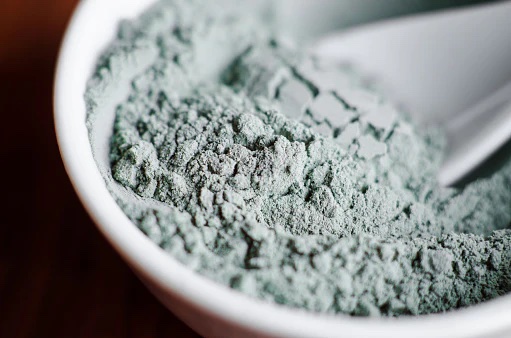
Bentonite clay for skin mask

In the quest for the perfect skincare and cleaning solution, many of us have tried various products with mixed results. Enter the Probioticaction Bentonite Clay Cleanser—a game-changer in both your skincare routine and household cleaning arsenal.

Unleashing the Power of Bentonite Clay and Castile Soap

Our Bentonite Clay Cleanser is a unique blend of organic castile soap and bentonite clay, enhanced with lavender essential oil. This powerful combination offers multiple benefits:

  1. Deep Skin Cleansing: Bentonite clay is renowned for its ability to detoxify and exfoliate the skin. It draws out impurities and toxins, leaving your skin feeling smooth and rejuvenated. Paired with the gentle cleansing properties of organic castile soap, our cleanser is perfect for daily use, providing a deep clean without stripping your skin of its natural oils.
  2. Tough Stain Removal: Have you ever struggled to remove tea or coffee stains from your favorite cup? Our cleanser’s potent formula tackles even the most stubborn stains effortlessly. Unlike regular dish detergents, the combination of bentonite clay and castile soap cuts through grime, making cleaning a breeze.
  3. Natural and Soothing: We believe in the power of nature. That’s why our cleanser is made with organic ingredients, ensuring a gentle yet effective cleanse. The addition of lavender essential oil not only enhances the cleansing experience but also provides a soothing aroma, making each use a delightful ritual.

Why Choose Probioticaction Bentonite Clay Cleanser?

  • Versatility: Whether you’re using it as a face cleanser or for household cleaning, this product delivers outstanding results.
  • Natural Ingredients: Free from harsh chemicals, our cleanser is gentle on your skin and safe for the environment.
  • Addictive Sensation: The refreshing and smooth feeling after each use will make you look forward to your cleansing routine.

Join the Probioticaction Revolution

Transform your cleaning and skincare routine with the Probioticaction Bentonite Clay Cleanser. Experience the natural, powerful, and soothing benefits of bentonite clay and organic castile soap. Visit our website to learn more and get your bottle today!

Men’s Skincare – Choosing the Right Stuff

men skincare

The attention paid to men’s health has certainly evolved over the last few decades. We have evolved from a time when men would rarely talk about (much less have) daily skincare regimens to today when industry research shows that men are spending as much money on skincare as women. Men are spending just as much money as women on skincare products, with male skincare products being the fastest-growing segment of the men’s grooming industry. With so many products, it’s easy to be overwhelmed by the sheer quantity of products available. So what is really necessary for the well-groomed man to have in his bathroom?

Healthy skin is a vital part of a person’s appearance. If your skin isn’t cared for properly, it can make you look older or unhealthy. There are many products to help men to maintain their skin including moisturizers, facial cleanser, anti-aging creams, body wash, and much more. How do you know which ones to choose, or even what you need? Here are a few things to keep in mind when selecting skincare products. 

1. Avoid products with heavy scents. While smelling good is something that everyone enjoys, many scents can easily be overpowering, particularly artificial scents. Products that have artificial scents can irritate your skin, as the additives used to create the scents are typically a combination of harsh chemicals. Stick with light or natural scents. In addition to avoiding possible rashes and breakouts, your coworkers will appreciate it.

2. When applying products, less is more. Some people think that in order for a skincare product to be effective, it must be layered on like paint on a bare wall. Most of the time, this is not the case. Moisturizers should be rubbed into the skin so that the skin is moistened but not wet. Many facial cleansers require only an amount the size of a nickel or quarter to be effective. In addition to being wasteful, the excessive product can clog your pores, causing breakouts or even cause infection. 

3. Go natural. Generally speaking, you want to stay as natural as possible with your skincare. Anti-acne products, for example, tend to use harsh chemicals such as benzoyl peroxide or salicylic acid. These chemicals have been known to cause chemical burns and allergic reactions, leaving permanent scars. Try and find options with fewer chemicals and that use overly artificial additives. 

4. Don’t be afraid to ask for advice. Men have particular needs when it comes to skincare, just as women do, and the variations between needs can be vast. What works for women’s skin may not work for yours so it’s important to pay attention to what your specific needs are. If you spend a lot of time outdoors, for instance, you’ll want to find products that contain a minimum of 50 SPF. If your skin tends towards dryness, then a good moisturizer is going to be a cornerstone product in your repertoire. Do you break out constantly? Then products for sensitive skin might be the best choice for you. Ask your doctor what they recommend and if you need to, see a dermatologist for persistent issues.

Skincare doesn’t need to be complicated. In fact, it’s best to keep things simple. Finding the right products might take a little time but in the end, the effort will be worth it. For many men, having a healthy, virile appearance is a key part of their psyche and self-worth. Learning what skincare products work best for you is the first step in this process.

How To Maximize Yogurt and Kombucha Health Benefits for Beautiful Skin

Beauty bloggers around the world are touting the skin-clearing benefits of yogurt facemasks and kombucha face washes. But do they really work? Here’s the short answer: Yogurt and kombucha health benefits really only come into play when eaten.

Because these foods contain anaerobic bacteria, which only function without the presence of oxygen, it’s more effective to ingest them.

Take a look at Courtney Leiva’s kombucha face wash story. Leiva brewed her own batch of kombucha to reap the benefits of the fermented tea beverage’s probiotics. While probiotics are scientifically proven to improve skin health, including alleviating acne, rosacea and eczema, it’s important to note probiotics work in different ways depending on the types of bacteria they contain.

Activating Yogurt and Kombucha Health Benefits

There are two types of bacteria in probiotics that improve your skin: aerobic bacteria and anaerobic bacteria. Aerobic bacteria require oxygen to thrive and work their magic. Then there are anaerobic bacteria, which lose their health effects when they come into contact with oxygen.

Topical yogurt and kombucha skincare regimens are ineffective because they possess anaerobic bacteria. These probiotics lose their potency because oxygen abounds when washing your face and leaving facemasks to dry.

To fully enjoy the yogurt and kombucha health benefits you hear about, you should consider eating these food products instead of putting them on your face. When ingested, their probiotics boost the immune system within the intestinal tract to effectively manage inflammation and immune responses, ultimately enhancing skin health.

Why Aerobic Bacteria?

Probiotic skincare products featuring aerobic bacteria are the best option for topical regimens. When aerobic bacteria come into contact with oxygen, they collaborate with human cells to strengthen your immune system and diminish germs.

Here’s how it works: You apply the topical probiotic with aerobic bacteria to reintroduce healthy bacteria to your face. These healthy, anti-inflammatory bacteria compete with harmful bacteria for food and resources. Eventually, these probiotics restore the skin’s optimal bacterial balance while minimizing skin problems like rosacea, eczema and acne.

Where can I Find Skincare Products with Aerobic Bacteria?

While yogurt and kombucha contain essential bacteria for supporting skin and immune system health, it’s better to ingest them to maximize their potential. Choosing topical skincare products with aerobic bacteria can help you achieve results when applied properly.

Skincare products like Probiotic Action® are formulated with Bacillus subtilis, a bacteria you can find on healthy human skin. You can also find Bacillus subtilis in your stomach, plants and soil.

So, how does Probiotic Action® work? A simple spray coats the skin with a layer of Bacillus subtilis to counter harmful bacteria. By eating dead skin cells and toxins harmful bacteria need to survive, Probiotic Action® products naturally wipe out these bacteria on the skin’s surface and deep within pores.

The end result? A much-needed immune boost countering the negative effects of environmental damage, all while returning the healthy glow you desire.

Remember to keep these scientific factors in mind to enjoy the yogurt and kombucha health benefits beauty bloggers are talking about. In short, probiotics are complex. While aerobic and anaerobic bacteria both support healthy skin and immune systems, they operate in two very different ways. Balancing their effects can help you achieve soft, taut and healthy skin—no gimmicks required.

CTA_Emerald Spray_Probiotic Skincare