Best skin care tips for back to school

acne teen

Summer is winding to a close. Days are getting shorter, nights are cooler, and it’s time to get back into the swing of everyday life. A new school year means another chance to reinvent and explore. Why not start kick off the year with a healthy new routine and nourishing skincare products? Here’s how to maintain glowing skin this school year: 

Best skin care tips for back to school

Healing acne-prone, dry, or combination skin can take some trial and error. Too often, harsh chemical concoctions or aggressive antibiotic creams and tablets are the first line of defense for skin blemishes and problems.  

Instead of trying product after product, there are a few simple tips and tricks that can greatly improve your skin health. Here are a few to consider:

  1. Clean your cell phone screen regularly

Cell phones are surprisingly dirty pieces of technology. You often hold them in your hands throughout the day, exposing them to whatever else you’ve happened to touch.  

You then put all of this unknown dirt and bacteria right next to the sensitive skin on your face when you use your phone.

You can clean your cell phone screen by spraying a soft cloth and a little white vinegar mixed with water. Vinegar is naturally antimicrobial, making it a great natural choice for cleaner.  

Changing pillowcases at least twice per week can also help keep unwanted dirt and oils off of the skin.

  1. Get into a healthy skincare routine

Did you know that there are as many as one hundred trillion bacteria and other microorganisms that live on the skin? These bacteria make up what is called the skin microbiome, which is like a microbial ecosystem that each person carries around on their bodies.

A healthy skincare routine means avoiding overly harsh soaps and chemicals that can dry out the skin and disrupt the natural balance of healthy microbes on the skin. A balanced skin microbiome means healthy, blemish-free skin.

Washing the face with an all-natural gel or cream cleanser once daily, removing all cosmetics before bed, and drinking plenty of water are all important aspects of a healthy skincare routine.

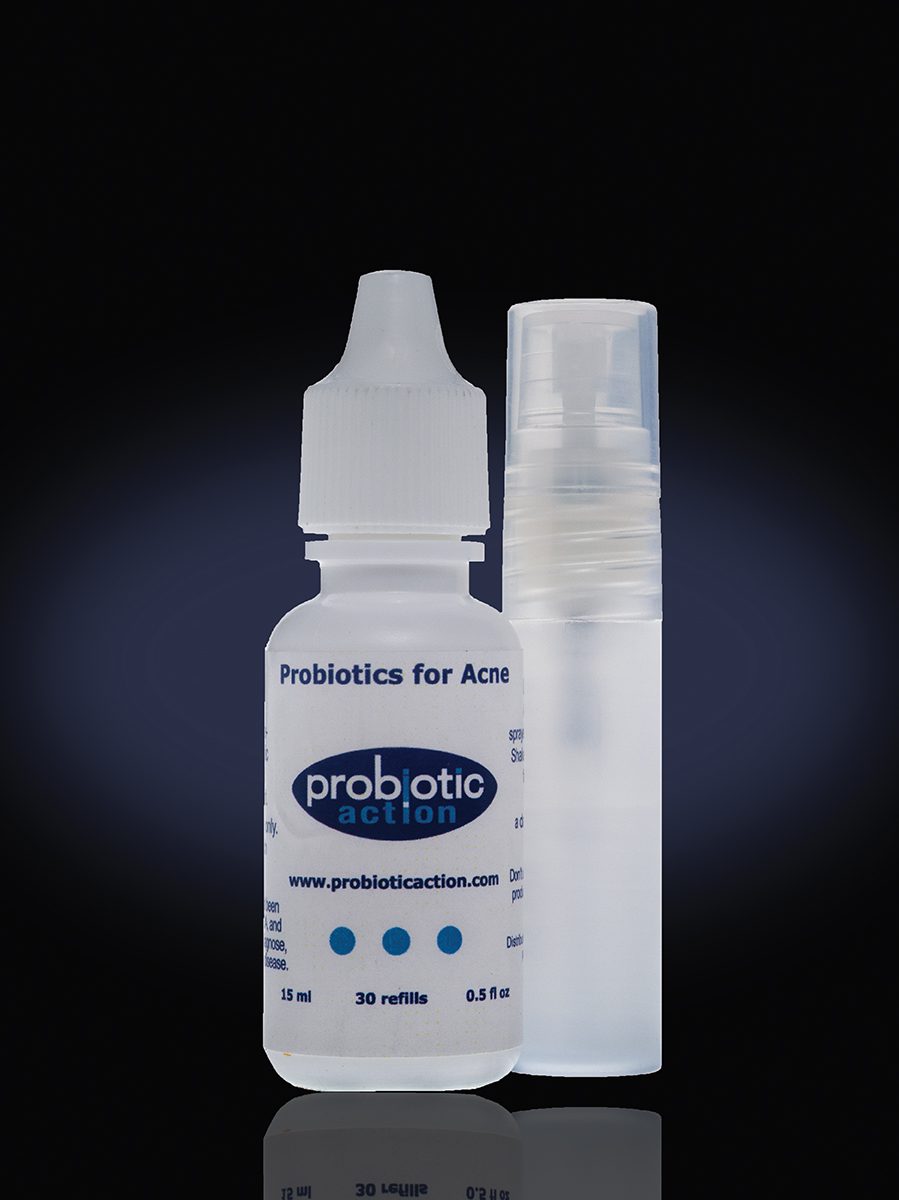
Topical probiotics like Probiotic Action’s Emerald Spray excellent additions to a daily skincare regimen. Topical probiotics re-introduce beneficial and anti-inflammatory bacteria to the skin when it shows signs of imbalance. 

  1. Don’t touch

Have pimples? Stop popping them! If breakouts are your problem, touching and picking at the skin may only worsen the condition.  

Instead, try wetting down a cotton pad or a washcloth with some apple cider vinegar and applying the natural toner to the infected area.

After the toner has begun to evaporate, apply a topical probiotic. A probiotic spray can easily reintroduce beneficial bacteria to the skin without coating the skin in potentially aggravating oils, creams, or other chemicals after toning. 

  1. Approach skincare from the inside out

The skin is the largest organ in the body and, as mentioned above, its home to trillions of helpful microorganisms. To keep these microorganisms happy and healthy, a healthy diet is crucial.  

Common food allergens like dairy and wheat can promote systemic inflammation, causing imbalances in the immune system as well as the microflora living on and inside the body.  

Many beneficial microorganisms like to eat fiber, especially fiber that comes from leafy green vegetables, onions, garlic, leeks, and jerusalem artichoke. Drinking plenty of water and a plant-filled diet provides a solid base for glowing skin.  

How to get Probiotic Action

Want to kick the school year off with a bang? Probiotic Action is having a Back to School Sale! Topical probiotics are an excellent addition to a daily skincare routine, helping to restore and maintain an appropriate balance of microflora on the skin.

For a limited time only, Probiotic Action is offering 20 percent off of our Emerald Probiotic Spray. The Emerald Spray contains a concentrated dose of Bacillus subtilis. We like to called this organism “the good bacteria.”

Purchase your Emerald Spray on Amazon here and use promo code CG2T6HOF for the discount.

Teen Acne

If you have acne, you are not alone. Acne is the most common skin problem in the United States. In fact, an estimated 80 percent of people between age 11 and 30 have experienced acne. Still, having constant pimples can be embarrassing and painful. Fortunately, there is a new trend in teen skincare: topical probiotics.

Topical probiotics help teen acne by treating the face with beneficial bacteria. Many teens often turn to prescription medications or harsh washes and cleansers to get rid of acne. But, many of these products can irritate the skin, causing dryness or making acne worse. Can probiotics make a difference? Here’s how topical probiotics work for teen acne:

What causes teen acne?
Teen acne is not simply a problem with bacteria. Breakouts occur when hormones change. Hormones are chemical messengers that help the brain communicate with the rest of the body. During puberty, hormones that control oil production in the skin are released in large amounts for the first time.

With acne, hormones called androgens are the cause of the trouble. Androgens are often called “male hormones” because they are more abundant in men. However, both boys and girls begin to produce androgens like testosterone during puberty. Testosterone triggers the production of oil in the skin.

Pimples pop up when glands in the skin cause the body to overproduce an oil called sebum. In the right amounts, sebum is a good thing. It waterproofs and helps lubricate the skin, preventingit from getting too dry.

With acne, however, too much sebum clogs pores and traps in irritating bacteria. This bacteria isa part of what is called the skin microbiome, which is the term for the unique ecosystem of bacteria that lives permanently on the skin.

Sometimes, parts of this ecosystem becomes imbalanced. Beneficial bacteria can be overtaken by more harmful, inflammatory bacteria. With acne, an infection starts in a pore when a community of inflammatory bacteria has a feast on the excess sebum.

Do probiotics help teen acne?

After washing with a gentle skin cleanser, applying a topical probiotic re-introduces beneficial bacteria to the skin. These bacteria can then outcompete the bad bacteria by hogging their food sources.
Beneficial bacteria like Bacillus subtilis, which is an ingredient in Probiotic Action®, also release chemical compounds that help them overpower other bacteria. Bacillus bacteria is naturally found in healthy skin and soil, and is not known to colonize the body like acne-related bacteria.

Topical probiotics are an alternative or an addition to antibiotics and harsh skin cleansers. After antibiotic acne treatment, topical probiotics can be applied to re-populate the skin with beneficialbacteria. They can also be used as a spot treatment at the first sign of a pimple or breakout. With continuous application, teens will see clearer skin within one week. This is especially true when accompanied by adequate sleep, lots of water, and a healthy diet low in sugar and caffeine.

Where do you find topical probiotics for acne?

Probiotic Action® offers a line of probiotic skincare treatments and face washes. For difficult to treat skin, Probiotic Action has created the Healthy Balance 2 Step Restoration Kit. The kit includes a probiotic gel cleanser, which contains skin-healthy sunflower and coconut oil, as well as antimicrobial rosemary extract.

The cleanser followed by the Emerald Topical Probiotic Spray Treatment, which offers a highly concentrated dose of Bacillus bacteria. The Emerald Topical spray can also be used as a spot treatment in between major breakouts. All of Probiotic Action products are vegan, chemical free, fragrance free, non-toxic. To shop Probiotic Action, click here.

ALSO, Probiotic Action® is please to provide followers with a discount code!
Enter 4KCF7JXWQ21J at checkout and get $5.00 off!!

Adult Hormonal Acne

As the term might suggest, hormonal acne is acne that is triggered by hormonal changes in the body. To get rid of the acne completely, working with a doctor to find the root cause of hormonal troubles is recommended. However, topical interventions can still help. Here’s why you should consider probiotics for hormonal acne:

What is hormonal acne?
Hormonal acne causes cysts to show up on the chin and around the forehead. Male hormones called androgens are the culprits, testosterone included. These hormones encourage glands in the skin to produce more oil. As a result, pores become clogged, making the perfect breeding ground for a bacterial imbalance.

Both men and women can experience hormonal acne and the condition is most common during the teen years. Adult acne, however, is becoming far more common. A 2008 study conducted by the University of Alabama found that 50 percent of women between the ages of 20 and 29 had adult acne. 26 percent of women between the ages of 40 and 49 were affected.

Hormonal Acne
Do probiotics work for hormonal acne?

In the clinic, antibiotics are often used in defence against severe acne. However, there may be reason to opt for a probiotic instead. The skin is coated by a microscopic ecosystem of bacteria, fungi, viruses, and other microbes. These tiny free-riders work symbiotically with human cells, contributing to a healthy immune system.

Unfortunately, imbalances in the skin microbiome can also contribute to acne, even if the underlying cause is hormonal. In hormonal acne, bacterial imbalance can still contribute to inflammation and cysts.

One of the theories behind the effectiveness of topical probiotics is that beneficial bacteria can crowd out or out compete pro-inflammatory bacteria. Bacteria belonging to the species Propionibacterium acnes are thought to be the primary instigators of acne pimples and cysts.

Applying a probiotic to the skin offers a dose of helpful bacteria in hopes of reducing the problematic community. Microbes like Bacillus subtilis, an active ingredient in Probiotic Action, are naturally found in the soil and on vegetation. They are also a natural part of a healthy skin and gut microbiome.

When placed on the skin, these live bacteria compete for food and resources with other strains. Bacillus subtilis is known to compete with other bacterial species by excreting compounds that are toxic to certain microbes. 

This helps the beneficial Bacillus subtilis take up residence on the skin while more harmful types of bacteria are crowded out and possibly killed off. Unlike P. acnes bacteria, is rare for Bacillus subtilis to colonize on the body. This means that it is safe to spray on the skin without aggravating the acne.

Where to find probiotics for acne

Probiotic Action offers two probiotic sprays that can be used topically for acne. The Probiotic Action Sprayer contains two ingredients: purified water and Fermented Bacillus subtilis. To use, simply dilute the probiotic fluid with some filtered water and apply to the affected area.

For best results, it is recommended to wash your face with a gentle but deep cleanser like Probiotic Action’s Bentonite Clay Cleanser. If using your own cleanser, an organic product is recommended.

How Drinking Probiotics May Help Clear Acne

[quote align=”center” color=”#000000″]Following the release of information that Kefir holds more probiotics than yogurt, Probiotic Action, popular for their adult acne treatment, shares new insight on why drinking probiotics as a supplement may help consumers get clear skin.[/quote]

A recent article by the mankatofreepress.com shared insight on how Kefir is being seen as a stronger probiotic product than yogurt, and how it helps promote the growth of probiotics in the body system.
As the article stated, Kefir, being a liquid is, not only digested quicker, but contains three times more probiotics strains than most yogurts.

As a leader in probiotic awareness and education, Probiotic Action, best known for their adult acne treatment shares how drinking Kefir may help aid in the reduction of breakouts, and promoting probiotic growth in the body. Those suffering with acne are often told that milk based products and dairy will contribute to acne flare ups. As a fermented milk product, items like yogurt and Kefir, have the reverse effect. As probiotics are needed to combat the P.acnes bacteria known to cause breakouts, probiotic based products help in the digestion of enzymes in milk products and other foods, which contribute to the production of acne causing oil, and feed the P.acnes bacteria.

Aside from the digestive aids, The PA team offers that the probiotics in a liquid form, will enter the body system faster, and if low in sugar, may help supplement a topical probiotic better than probiotics in pill form. “Every body will need a different amount of probiotics to help supplement their acne treatment,” says Probiotic Action spokesman Fernando Perez. “Drinking Kefir may work better for some than others, but is worth a try to gain a better mix of probiotics. If one is using a probiotic beverage to help supplement our adult acne treatment, make sure that the product has a low amount of sugar- consuming high amounts of sugar will only feed the bad bacteria causing flare ups,” added Perez.

For further insight on benefits of probiotics, why they are known as “the best acne treatment”, and information on using probiotics for acne, visit ProbioticAction.com.
To stay in touch with Probiotic Action as they offer new products, like them on Facebook for reviews and product updates. Probiotic Action is an advanced acne treatment that uses probiotics for acne containing the “good bacteria” that is naturally found on healthy human skin.

By using probiotics, Probiotic Action is an effective treatment that restores the normal bacteria content on skin, while battling what causes acne. Probiotic Action will successfully clear skin when used as an adult acne treatment while protecting skin against bad bacteria, free radicals, and pollutants*.


*These statements have not been evaluated by the Food and Drug Administration. Probiotic Action is not intended to diagnose, treat, cure or prevent any disease.

Revolutionary Portable Acne Treatment

Unlike other acne cream suppliers Probiotic Action has developed a simple, portable, solution using the power of probiotics to treat the P. acnes bacteria known to create acne breakouts. In prior years many other companies were using messy creams, or extensive step by step processes requiring acne sufferers to fill their cabinets with many bulky products.

Recently, Probiotic Action has made the switch to a new “Micro Spray Bottle” that allows the acne treatment to fit in a pocket, or handbag without detection.

Fernando Perez, A Spokesman for Probiotic Action explains why having a portable acne treatment may change the lives of acne sufferers:

“Firstly, Probiotic Action is unlike any other acne treatment in that it uses stabilized spore-forming probiotic bacterium to fight P. acnes bacteria- there is no product quite like it. Secondly, this product can be created once a day in the morning with a few simple drops into the sprayer, and kept with the user for an entire 24 hours. For those on the go, keeping the solution in a car, gym bag, pocket or purse allows users to treat their acne several times a day, rather than just once or twice”, say Perez.

Additionally, Perez adds that since the solution has no odor, color, or residue using it several times a day can be done discretely by both men and women.

For more information on the probiotic acne treatment visit, Probiotic Action on Facebook and on the Web.

Probiotic Action is an advanced acne treatment that uses Probiotics for acne containing the “good bacteria” that is naturally found on healthy human skin. By using probiotics, Probiotic Action is an effective treatment that restores the normal bacteria content on skin. Probiotic Action will successfully clear skin when used as an adult acne treatment while protecting skin against bad bacteria, free radicals, and pollutants.

Click here to get rid of your acne problem today!

Cystic Acne Cure

cystic-acne-cure

Cystic acne is more than the rash of pimples teenagers get for a few years all over their faces. It is a deeper form of skin problem treated by dermatologists. Sufferers sometimes take antibiotics or are prescribed a mixture of oral and topical remedies. Is there a cystic acne cure, however, and if so, what is it?

Preventing Acne

To some extent, if you are genetically disposed to experiencing acne, nothing you do is going to prevent that. On the other hand, it never hurts to review your diet, including how much fat, sugar, and water you consume. Consider hygiene routines and decide if you are cleaning your face regularly and well. Use gentle cleansers to reduce oiliness without drying skin out. Protect your skin from the sun, as sunburn exacerbates scarring.

How to Get Rid of Acne

Start with natural acne treatment if you can. It might not work, but that depends on the severity of your condition. In addition, natural products are less likely to produce painful side effects than chemicals will.

The average individual with acne will try a number of products and methods to rid herself of blemishes and prevent scarring. These include creams, lotions, bars, and cleansers. Having acne does not mean your skin is extra-sensitive. Many more products are available if you are not fearful of burning your skin. For sensitive skin, gentle cleansers are also on the market. Cetaphil cleanser for sensitive skin, for instance, is recommended by professionals for gentle treatment of adolescent and adult acne. Cetaphil also sells products that contain sunscreen.

Note that you do not have to pay a month’s allowance or wages to buy a good acne cleanser. Over the counter lotions are often very good at cleaning and moisturizing troubled skin.

Waiting for Results

There is no instant remedy to a problem spreading all over one’s face, arms, or back. Consumers must use chosen products regularly, perhaps for a month or several weeks, to determine if it is having the desired affect. An exception would be if it causes irritation. Cleansers are unlikely to cure acne, but they will often control it.

At first, it might seem like acne treatment is worse than acne itself. Skin dries out and old cells fall away, making cheeks and foreheads appear flaky. This is natural, but only to a point. Mark your progress and methods on a calendar to be accurate when speaking to a dermatologist.

Further Treatment

A dermatologist should be seen if acne is really holding on no matter what a person tries. Living with a few spots is one thing, but for many individuals, the presence of multiple, angry-looking red spots and welts on their faces make them self-conscious and depressed. Cystic acne will persist past adolescence and can leave many scars.

In this case, a dermatologist or doctor will recommend trying a few things to cure the problem. One is to take a brand of birth control pill. Side effects could be numerous enough that you avoid this method, but there are arguments for the benefits of contraception, including the prevention of certain cancers.

Antibiotics fight the infection that is going on in your skin cells. Your doctor will probably only prescribe them if you have tried everything else or if your skin appears to be severely infected.

An effective, potential cure is on the market, but it is also potentially dangerous. Isotretinoin sometimes causes physical or emotional side effects. In particular, it is not advisable for pregnant women to use this drug, which is associated with miscarriage and fetal deformities.

It is always best to start slowly, with natural products and over the counter remedies. Treat your skin with these products before talking to your doctor about expensive and potentially risky medication.

For the best all natural acne treatment, visit Probiotic Action today.

Natural Acne Treatment

Selecting an acne treatment can be a challenging process. Not only are there products and remedies that are designed for various skin types, but there are also solutions for addressing specific skin issues. There are a number of internal and external causes for blackheads, whiteheads, cystic pimples and other blemishes. The best treatment will target the underlying factors that a person is dealing with.

How to Get Rid Of Acne Fast

The first step in eliminating a rash of pimples is to identify its cause. For teens and pre-teens, blemishes are usually caused by a major influx of hormones. For other people, however, different skin problems can be caused by self-care and cosmetic products that clog the pores, poor hygiene or follicle infections, among other issues. In these instances, implementing a four-step skincare program will often work best.

This program entails washing the face with a mild cleanser, exfoliating away dead skin cells with a slightly abrasive exfoliation tool, applying an astringent to eliminate bacteria and close the pores and then using a lightweight moisturizer to rehydrate the skin. While many people are tempted to use harsh soaps and hot water to scour their pimples away, the resulting dry skin will often cause the sebaceous glands to become overactive. Thus, it is always best to treat the face gently and to make sure that a quality moisturizer is used.

Dealing with Adult Acne

Like acne that rears its head during puberty, adult acne can also be caused by hormonal changes. These blemishes can affect the face, the back, chest, shoulders and buttocks, among other body areas. More commonly, however, acne in adulthood is caused by grooming or cosmetic products that irritate the skin. Heavy make-up, oil-based lotions and facial cleansers that contain unnatural ingredients can result in contact dermatitis, eczema and other forms of skin irritation that look very much like acne.

Consulting with a dermatologist is one way to learn why the skin is responding in this way. Sometimes adult acne is merely an external sign of an internal problem. Systemic infections could be wreaking havoc on the skin and thus, once these issues are resolved, the outward symptoms will begin to dissipate.

Finding a Good Natural Treatment

There are many ways to implement a natural treatment for acne. Some people look for skincare products that have all-natural ingredients, as opposed to those that contain a number of known toxins. Others look for all-inclusive systems that target blemishes both internally and externally. These systems require the use of herbal supplements to help balance the hormones and cleanse the body of contaminants. They also include mild cleansers, toners and moisturizers for topical application.

Using Cetaphil Cleanser

When a person’s skincare products are responsible for the development of acne, it is important to simplify the skincare routine. Cetaphil cleaner is an ideal solution for removing excess oils and dirt from the surface of the skin, without causing irritation. This product leaves the dermis both supple and hydrated, thereby preventing the excess production of sebum and oils. People should take care to use tepid water to rinse this product off, rather than using water that is extremely hot or cold. Extreme temperatures will do little to reduce the appearance of acne and could cause damage to the topmost skin layers. With any natural acne treatment, it is important to avoid stripping the skin, scalding the skin or abrading it away with aggressive cleansing measures. The best products and systems are gentle and easy to use. Simplicity is often the key to clear skin.

Choosing a Cystic Acne Cure

In order to find a good cystic acne cure, people will often need to consider the possibility of internal infection or toxicity. Cystic acne is a strong indicator of an overwhelming amount of internal toxins and it is also a sign that major infections might be present. Certain strains of staphylococcus can result in the formation of large, pus-filled boils all over the body. Thus, when dealing with chronic and persistent skin cysts, it is best to consult with a trusted dermatologist. Antibiotics could be necessary for addressing the underlying infection.

For more information on the best all natural acne solution, visit probioticaction.com today.

Aerobic vs. Anaerobic Probiotics

Probiotic Action Explains Differences Between Aerobic vs. Anaerobic Bacterium

Probiotic Action explains what the differences between aerobic and anaerobic bacterium and how they relate to probiotics.

Probiotic Action issued an explanation regarding the nature of two different kinds of bacterium, aerobic and anaerobic, and how they related to the probiotics for acne contained in Probiotic Action itself.

As Probiotic Action representative Fernando Perez states, “There is a distinct difference between aerobic and anaerobic bacterium. Many people think of aerobic and anaerobic in terms of exercise, or for the more scientifically inclined, in cellular activity. What many people don’t realize is that this process affects bacterium as well.”

Perez explains, “There are certain bacteria that thrive in places where oxygen is available, hence the term aerobic, whereas there are also bacteria that thrive through fermentation rather than cellular respiration.  There are some probiotics that do not need oxygen to live, which the probiotics which are found in yogurt. Those probiotics will not do anything to your skin if applied as yogurt because they cannot survive in the presence of oxygen; they are the anaerobes. However, there are certain bacteria, these are the probiotics in Probiotic Action, that do need oxygen to survive, and those are the ones you want to put on your skin. Not all probiotics are the same and it’s important to know the difference.”

“The purpose of the explanation,” Perez says, “is to clear up any misconceptions that people might have about probiotics, differentiate between the bacterium, and answer questions about the bacterium.  All of this is to educate the consumer. In addition to telling them why Probiotic Action is the best acne treatment, it’s important to tell them why as well.”

Probiotic Action, a pioneer in using natural skin care, follows all probiotic-associated products to collect information in order to help educate the public on the power of probiotics for skin care and overall health.

For more information, please visit ProbioticAction.com.